

Distributor demo storefront, built on the PIMento API Sign in

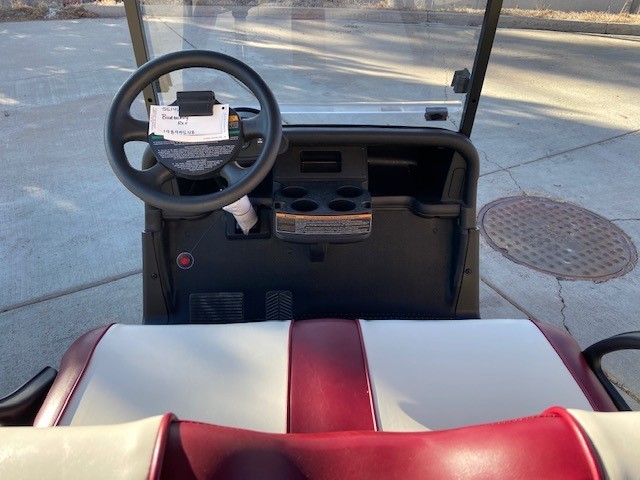
2019 E-Z-GO Burgundy RXV..

2019EZGORVX-1

$10.00 and up

Brand new EZGO RXV, custom pin striping, custom wheels, and custom white/burgundy seat wraps. 3 yr warranty on new batteries.

Find the part that fits

That combination is not one the catalog records. Start again

Order

No part matches that configuration. Start again

Details

Zero maintenance lithium batteries 

Faster charge times (compared to traditional lead acid batteries) 

Opportunity charging

Impact resistant bumper

Industry's largest bagwell

Contoured seats

Integrated Cup, Ball & tee holders

Optional USB port

Optional fold-down windshield

Product information

  • 2019 E-Z-GO RXV 2-Passenger
API reads behind this page 3 over the wire, 5 from cache · 390 ms total · template: Default Application
Method Path Source Status Time
GET /v2/products/1000?$expand=items,media,attributes,related,applications,fitment,tabs,documents,modifiers network 200 157 ms
GET /v2/products/1000?$expand=pricing network 200 72 ms
GET /slugs('E-Z--BURGUNDY-RXV') cache 1h — —
GET /me cache 30m — —
GET /items(…)/attributes ×2 cache 30m — —
POST /v2/configurator network 404 160 ms
GET /categories cache 15m — —

204 and 404 both mean “no rows” on this API — which of the two an endpoint uses is per-endpoint, and the client maps both to an empty result rather than an error. Collections come wrapped in an OData envelope and are capped at 100 rows per page.

Rows marked cache were answered from memory, and the time beside each is how long that kind of read is held; one marked asked twice is something this page had already read while rendering, so it cost nothing either way. Catalog reads are cached by rate of change rather than on one site-wide timer:

Pricing and stock are read live on every view — there is no setting that caches them. That is why a warm product page still makes exactly one request: everything else on it came from memory.

The catalog can also drop all of it at once rather than waiting for a tier to lapse, by calling POST /hooks/cache when it publishes.